Blog Large Image Whole Post - Drought Proof TX
18956
wp-singular,page-template,page-template-blog-large-image-whole-post,page-template-blog-large-image-whole-post-php,page,page-id-18956,page-child,parent-pageid-1815,wp-theme-stockholm,ajax_fade,page_not_loaded,,select-theme-ver-3.1,wpb-js-composer js-comp-ver-4.11.2.1,vc_responsive

Rehydrating the Blanco River Valley

The Dry Blanco River

What is Happening

Why is this Happening

Centralized Solutions Spur Development

Decentralized Solutions Spur Accountability

Runoff Accountability in the Landscape

The Future of Water in the Blanco Valley

2
2
Oak Wilt?

Oak Wilt in Texas

Welcome to the Drought Proof Texas Blog!  Todays post is about the shocking level of oak wilt in central Texas. Is it really oak wilt? What is it happening? Why is it happening? What can be done about it? Finally, what to do if your oak forest has already succumbed to death. 


Central Texas Sees Devastation of Oak Woodlands 

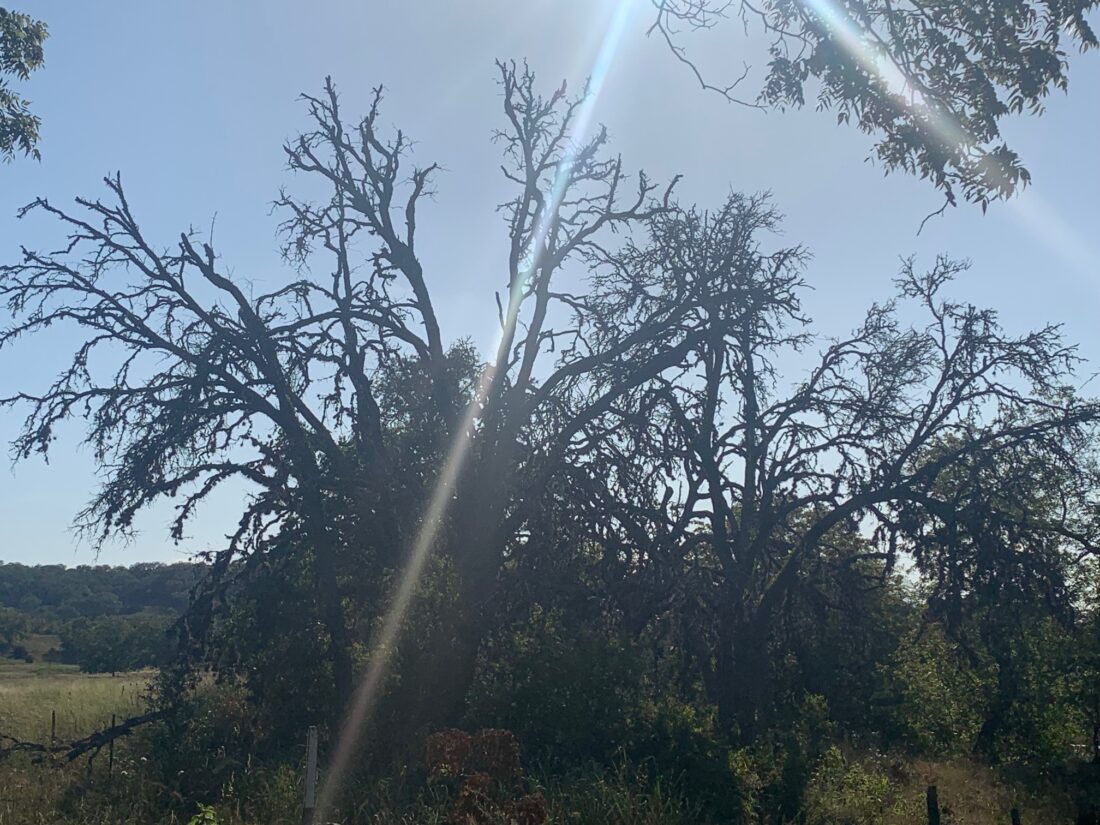
In my work I get the privilege of driving all over the backroads of Texas. Lately I’ve been shocked to see thousands of acres of oak woodlands dying off. Whole forests have failed to regrow leaves this spring leaving whole hillsides looking like a graveyard of trees. This can be seen in the areas surrounding Fredericksburg, Comfort, Blanco, Dripping Springs, Kerrville, Boerne, Harper and many other places. I know that oak trees have been dying off for many years. However, these trees are freshly dead with most of the limbs still intact and upright. The forests have had a run of tough years that experienced damage from heavy frost, drought, high heat, and high winds. But our forests have endured thousands of years of similar conditions, so what is different today? 

Oak Wilt or Groundwater Decline?

In 1994 the well on our family property in Blanco was drilled to 480 feet, had a static water level of 230 feet deep, and produced 20 gallons of water per minute. In 2018 this well stopped producing water. We were able to lower the well pump 40 feet to have water again. Needless to say, we quickly invested in rainwater harvesting systems for fear of running out of water again. Four years later, in 2022 during the ongoing severe drought, the well stopped producing water again. Keep in mind that we only use the well to operate a one-bedroom home that is infrequently used.  Thats 40 feet of ground water decline in 4 years, and 250 feet of groundwater decline over a period of 30 years. To this day, the well continues to be unproductive. Areas of high population like Austin and San Antonio have created a groundwater cone of depression. Water is being sucked out from under us and at the same time rainfall is becoming less effective at recharging the aquifer.

In February of 2023 The Meadows Center for Water and the Environment published a study done on the Little Blanco River. The study discovered that the Little Blanco River is no longer connected to the Trinity aquifer and is now fed primarily by water harvested on the landscape and stored in shallow soils. Deeper groundwater no longer is a source of water to keep this stream flowing.  Anyone who lives in the Hill Country can relate. Springs are going dry and ground water is being depleted rapidly. As ground water in the Hill Country declines, oak trees also lose access to water in the soil that has historically been available to them.  Is oak wilt just a symptom of groundwater decline?

Dry Soil is Detrimental to Microbial Life

Dry soils have much lower microbial activity than moist soils. During photosynthesis the trees take in sunlight, carbon dioxide, and water. They split the water molecules. Oxygen is released and the remaining hydrogens and carbons are used to create sugars needed to feed the plant. During productive times, excess sugars are released into the soil as “root exudates”. This liquid carbon drips from the very tips of the roots where microorganisms feed. In exchange for the sugary root exudates, the microbes provide minerals and nutrients that the plants cannot obtain on their own. Fungi and bacteria extend the root systems of the trees and act as a digestive gut for the plants.

Without moisture, microbial activity is reduced significantly, and trees lose their ability to synthesize nutrients effectively. The result is trees that are malnourished and vulnerable to disease. It’s then that concerned landowners reach out to so called “experts” to treat their trees. These experts often attack the symptoms instead of the cause by recommending bizarre treatments like injecting fungicide into the tree root zones. Trees that undergo such treatments almost always die since they literally depend on their symbiotic relationship with fungi.

Another common treatment of oak wilt in central Texas is “trenching” of the tree root system perimeters. The theory is that the disease is spread through the root system, and severing the root connections between infected and non-infected trees will prevent the spread of disease. It sounds logical in theory, but tree propagation professionals often use root pruning as a way to increase root growth. If root pruning works, it’s not for the reason that is being sold. The trencher loosens up the soil which allows air and water to infiltrate deeper into the soil. The root pruning actually encourages the growth of new roots which easily grow into the loosened soil. Therefore, it’s likely that roots become more interconnected than they were previously by using this method. Microbial activity also increases with more available water and air in the soil. Have you ever heard of a so-called expert explain the connection of soil health and groundwater decline in connection with oak wilt? 

Oak Wilt or Deforestation?

For years the state of Texas, Universities, and the agriculture extension offices have advocated for the removal of woody brush. How many times have you heard that the cedars are sucking up all the water and need to be eradicated? Is there any basis to these claims or is it more likely that the increase of population, civil engineering, and wells in Texas are the culprit of ground water depletion? 

Forests are grown in a succession of species. The Ashe juniper “cedar” trees are the foremost pioneer species of trees in the Texas Hill Country. As the Ashe Juniper forest matures, conditions are created for the growing of hardwood forests. The oaks, walnuts, cherry, redbuds, and ash trees often grow up in the protection of the juniper woodlands. Over time the forest transitions to more desirable species and the remaining mature juniper trees are tall, straight, and beautiful. By removing young juniper regrowth, we are limiting the potential of oak regeneration. 

We often find large oak trees in the midst of thick juniper brush. Our first impression is that the cedar trees are “choking out the oak trees” and proceed to remove these cedars. The theory is that the cedars are competing with the oak trees for water and nutrients. However, the cedars are providing vital shade and wind protection. When the cedars are removed, we can see over a short period of years that the root zone of the oak trees begins to dry out. When the oak tree trunks are exposed to the sun the bark dries out and begins to fall off, like a sunburn or cancer.

Observe the iconic “lone oak” tree on the prairie. The form that this lone oak tree takes is the shape of an umbrella. The branches grow in a way that protects the trunk of the tree from sunlight and wind. You can see that the branches grow all the way to the ground. However, in a forest the form that the tree takes is more upright, reaching upwards for the light. It’s protected from the sun by the surrounding trees. When these surrounding “trash” trees are removed the oak tree trunks are exposed to the light and it’s only a matter of time before they die.  Chances are high that every other tree has been removed except the oaks, so in the end you have no trees and no shade. The cycle begins again with juniper woodland regrowth. This is natures way of regrowing the forest.

People are sometimes jealous of the resources that the forest utilizes. I’ve heard folks say that the hill country would have more water if the landscape was covered in concrete! The asinine idea here is that plants are slowing down water from hitting the ground during small rainfalls. During a one-inch rainfall hardly any water reaches the ground in a thick juniper woodland. All of that moisture is absorbed by the thick boughs of the trees. Are the trees stealing our water?

Now consider the way that an engineer designs systems for water management. Does the engineer design the infrastructure based on one-inch rainfalls? No, the engineer designs systems based on the record 24-hour rainfall event. When the tropical storm comes and we receive more than 20 inches of rain in one day, you might actually want those juniper woodlands to absorb some of that rainfall and slow down the potential resulting flood. 

All of these steep hills must be covered in forest. The forest protects our hills from sun and wind evaporation. Storm water is easily managed higher up in the landscape before it accumulates in channelized streams and rivers. Forested hills allow stormwater to percolate into the soil and recharge seep springs that keep streams and rivers flowing longer throughout the year. Without healthy and dense forests on our hillsides the Hill Country will quickly become a desert. Oak trees cannot be expected regenerate and thrive without their forest companions and natures system of plant succession.


Oak Wilt or Desertification?

It’s easy and fun to the measure different surface temperatures using an infrared thermometer. During the summer, asphalt pavement can be 30 degrees hotter than concrete. Surprisingly, bare soil is the same temperature as concrete. Soil that is covered in grass can be 10-20 degrees cooler in the summer than concrete. The coolest soil temperatures to be found are underneath trees, 30 degrees cooler than sparsely grasses areas. Plants moderate climate. 

Go the beach in the summer and walk barefoot on the hot sand. It doesn’t take long for the sand to burn the bottom of your feet. The first place to run is a grassy lawn. The grass absorbs the light, diffuses the energy of the sunlight and makes the ground more comfortable to stand on. Or stand out in the summer Texas sun for an hour, eventually you’ll be searching for a shade tree to take refuge. A forest or grassland protects the soil from erosion during heavy rains. The forest provides protection from strong winds.  Forests retain moisture and because of cooler temperatures creates areas of lower atmospheric pressure that draws moisture into the forested landmass and creates rain. Plants moderate climate.

As Central Texas trends more towards desert, climate extremes will be exacerbated, and a new plant community will emerge as the old regime fades away. The loss of our oak trees and native forests is a sign of desertification and broken water cycle. Is the landscape a desert because there’s no rain or is it a desert because there are very few plants? Desertification, deforestation, and groundwater decline are part of the same problem that causes oak wilt.

Everything that is engineered and designed on the landscape is about drainage. From the roof of your house to the drainage ditches around the highways everything has been designed to drain quickly and efficiently. This causes a few problems. Along with efficient drainage comes the threat of floods during heavy rainfall events. Water is channelized into the streams and rivers and fast-moving water causes destruction in our riparian areas. If we slow down the rainfall in the uplands, it protects forests on the hills but also protects forests that shade our water courses by mitigating the force of flood waters. What good is all of that rainfall to us if it is immediately lost to the Gulf of Mexico? If we can engineer the total drainage of the state of Texas, we can also engineer the total rehydration of Texas and prevent oak wilt in the future. Drainage is necessary but should be balanced with soil and water conservation measures that turn a flooding liability into a groundwater asset. 

Prevent Oak Wilt with Soil and Water Conservation

Rehydrating the landscape is the first step to healing the landscape. 

-Create periodic contour barriers that slow down water as it flows downhill. Clean up rocky areas and organize the rocks on contour. Instead of burning logs and brush, that material can be laid on contour to slow down water and catch debris. Small ponds and terraces can also be used to retain storm water runoff on the landscape. 

– Keep soil covered as much as possible. Bare soil is public enemy number one. When a raindrop hits the bare soil, it changes from clean water to sediment water, and you know that erosion is occurring as soon at the raindrop hits the ground. By having green plants growing as long as possible during the year, the soil is fed through photosynthesis. Healthy living soils hold water much better than poor soils. 

-Livestock can be an asset to the land if managed for soil and water conservation purposes. Although livestock can also be a significant contributor to land degradation, Regenerative grazing methods are a powerful tool for improving the functioning of the ecosystem. 

What to do with all of that Dead Wood? 

Ok, so your oak forest is already dead, and you want to know what to do next.  The land is talking to you. Soil is dry and microorganisms are struggling. However, death of the forest can also be seen as nature’s way of healing. The trees drop all their branches and eventually the trunks fall over. In a natural setting without human influence this allows for a slow release of energy back into the soil. It will take many years for that wood to decompose and during that time new trees (pioneer species) will grow back and take the place of the old dead trees. All of that organic matter is food for the soil. But what do we often see done?

Often, we see folks bulldozing all of the dead trees into a pile and then the pile is set on fire. All of that organic matter that was supposed to feed the soil for decades is burned off in a few hours. This short circuits the entire healing process, fire sterilizes the soil, and the burn pile leaves a dead zone on the ground for decades where nothing will grow. A better idea would be to organize the dead tree material into lines on contour. This cleans up the site, makes it look more organized, helps with erosion control, allows the tree material to slowly decompose and feed the soil over time. We call them “Brush Berms on Contour”. The dead wood can also be put through a woodchipper to create mulch that can be used to cover bare soil and help establish plants. Mulch helps protect the soil from erosion, prevents evaporation, and lowers soil temperatures.

Burning all of that wood is a catastrophic loss for the ecosystem. I know that its expedient, but it’s also a fire safety hazard. Brush berms on contour are so easy, anyone can do it. It’s wonderful to watch wildlife using the contour brush structures as a home and birds will often drop tree seeds in these berms. Since the seedlings come up in a brush berm, they are protected from deer browsing and more likely to survive. The trees grow up in a more moist and fungal dominated soil that is very beneficial for fast growth. Burning the brush only encourages further desertification. 

Silvopasture

It’s both possible and beneficial for trees and grass to coexist together. Our goal with forest management in central Texas should be to encourage and maintain a complete forest canopy. Lower branches and many small trees can be cleared while still maintaining a shady canopy. In the shade of this tree canopy is an excellent place to grow native Texas grasses. Shady grasslands also create ideal conditions for grazing livestock. Cattle really appreciate the shade, and the grass grows thicker and healthier in the shade of trees. Observe the landscape and see for yourself. 


Are you interesting in learning how to do this kind of work and start your own business? Great, our non-profit partner does educational courses perfect for central Texas practitioners. Please visit: EARTH REPAIR CORPS – Diversity . Stability . Resilience

2
2

Permaculture Design Texas Hill Country

Permaculture Design layout
Successful Texas property design starts before the land is purchased and with Texas Topography Maps. For information about property selection visit my blog post here.

Permaculture is the design, creation, and maintenance of agriculturally productive ecosystems and sustainable human settlements. It is a system of design guided by ethics and principles which allow humans to step into our role as a keystone species and create landscapes more resilient and more abundant than nature can without us. 


My Permaculture Design Journey 

Like many people who have been attracted to Permaculture Design, I was initially led down this path because of health concerns. I had become sick with a disease that would burden me the rest of my life and was incurable. The mental effect of this injustice on my health was overwhelming and I could not, would not, accept this outcome. It’s those of us who have been hurt that seek the knowledge and source of true health. To me, the solution wasn’t just taking another pill to suppress symptoms, but I was lost in modern pseudo health sciences.  The real solution was an entire lifestyle change. 

The first time I heard the term ” Permaculture Design ” was while reading an excellent book by Ben Falk called “The Resilient Farm and Homestead” that was published in 2013.  Ben wrote in the book about the importance of clean and nutrient dense food, and I learned the foundation of health is actually in clean water and natural soil fertility. Suddenly the world made a little more sense and I had a focal point to meditate on. It was like I had unlocked some long forgotten ancient wisdom from my ancestors. A few weeks later I made the decision to start changing my life and enrolled in an online Permaculture Design Course with Geoff Lawton in 2014. 

The Change

The Permaculture Design Course was life changing. My perspective changed so much that I gave up my career in the military, moved back closer to home, inevitably was divorced, lost all savings and basically everything I owned. I had to let it all go to pursue my new path.  Looking back now, it was all worth it. The local permaculture community took me in, and I found a niche for myself in soil and water conservation. In 2015 I used my Post 9/11 GI bill to attend a professional construction school heavy equipment operation. In 2016 when Darren Doherty came to Texas to teach his excellent Regrarians Platform, I sat front and center in the classroom the learn as much as possible. During that time and since the beginning I have done over 100 designs implementing permaculture solutions and worked on nearly 200 different properties across Texas doing soil and water conservation projects. I’ve also had the privilege to speak all over Texas about soil and water conservation and teach 4 Permaculture Design Courses with Earth Repair Corps. Today I am more focused than ever, my health has improved greatly, and I enjoy a life worth living doing meaningful work. 


A Variety of Applications

Whether you are a farmer, homesteader, rancher, real estate developer, business owner, gardener, manager of public lands, government organization, or private conservation landowner, proper Permaculture Design can improve your project.  We can build homes that harvest their own water and create their own energy. We can build ethical real estate developments that have virtually zero storm water runoff.  Regenerative agriculture farms and ranches that reduce inputs and creates a more natural healthy product are possible. We can build high quality soils that heal our minds and bodies. We can even Drought Proof Texas. The Texas Living Waters Project determined this work was the best bet for the future of Texas water in 2018. 

We are currently working with government organizations doing soil and water conservation on endangered species habitat. The work being done will prove that we can improve ecosystems that support wildlife that is under threat of extinction. We are also working with government organizations doing research on how to recharge our aquifers. The work being done will prove that we can reverse ground water decline, revive springs, and protect our amazing Texas rivers. This work has been vetted as high as the Environmental Protection Agency as being the best in EPA region 6 when we won their GI/LID competition in 2017. 


Permaculture Design Process


The design starts with a phone call and an exchange of emails. We’ll need the address of the property, an outline of the property, and a full wish list of all the things you want to accomplish. The design is priced at a flat rate based on the context of the design.  We require 50% of the fee up front and final payment once the product is delivered. You receive a digital layered design that is very well organized and easy to use. You also receive a written report going over all the details on each layer of the design. The different layers can include but are not limited to climate, geography, water, access, buildings, forestry, fencing, soil, energy, economy (business), and recreation.  Clients get a first draft, and we discuss the layout together and decide on any changes that are needed. The second draft is more detailed and edited based on our decisions about the first draft. If the second draft is accepted, we complete a more detailed final draft. The process can take several months. We do not accept working with all clients or all properties. Any changes after the final draft is delivered will be billed hourly.

It’s time to embark on your own journey and become part of the new earth. Together we can make this nurture this world and create an eternal garden of Eden. 

Thanks, I look forward to meeting you.

Contact

Contact me by email:
 
vandyck.designs@gmail.com
 
For volunteer and educational opportunities visit Earth Repair Corps
 

0
1
Culvert Catcher

Culvert Catchers

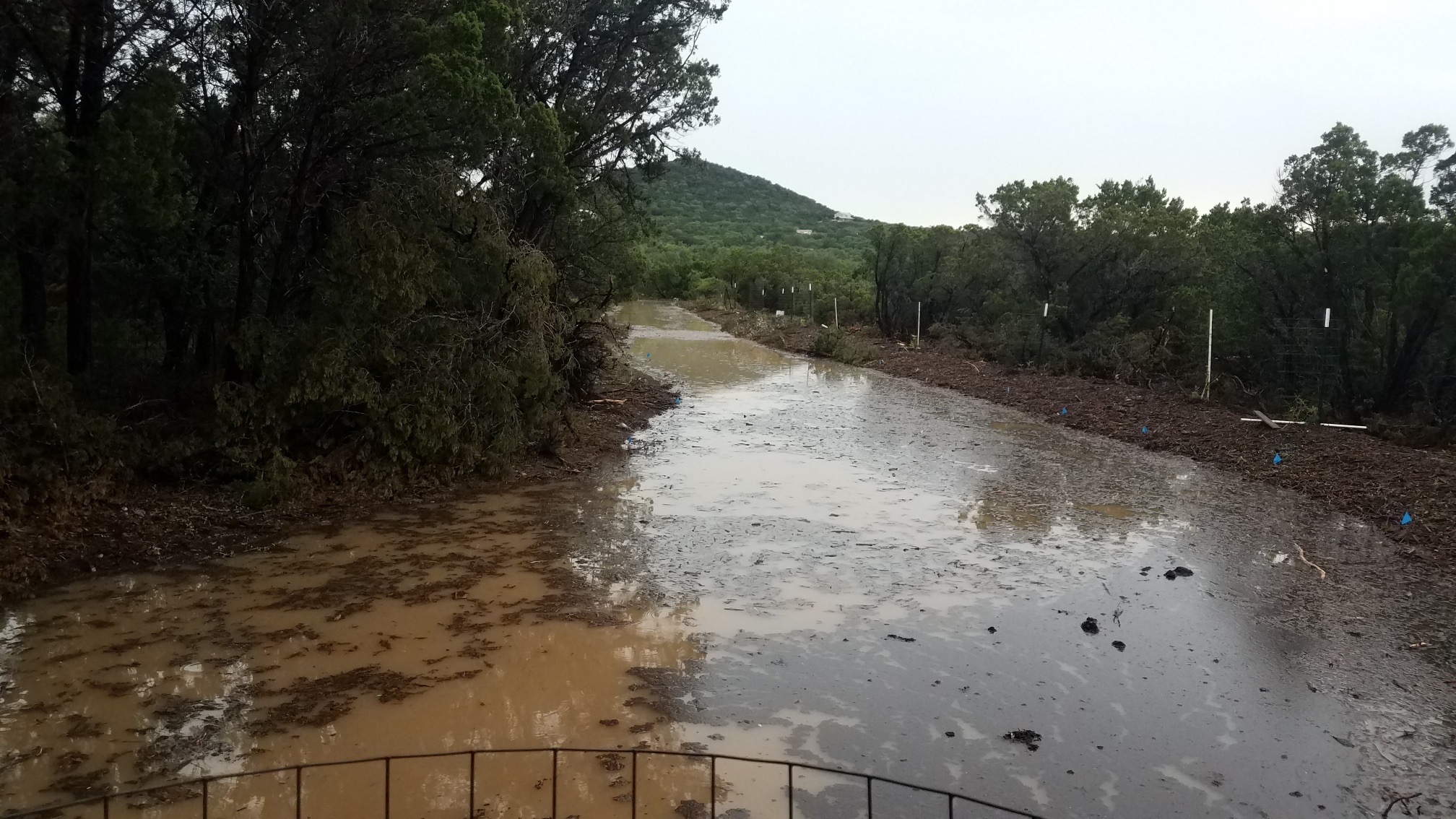
Welcome to the Drought Proof Texas Blog!  It is a very dry time in Texas right now.  At my home in Blanco, Texas we have received 6 inches of precipitation in the past 10 months. With our average annual rainfall being over 30 inches, we are at a huge deficit. Fortunately, we were blessed with a 1.5-inch rain a few weeks ago. It was a hard rain that lasted only for one hour, and it came down hard enough to create some stormwater runoff.  This was a moment we have been preparing for.  Today we learn about Culvert Catchers.


Stormwater Runoff

Stormwater runoff increases in areas with hard surfaces like roads, parking areas, and buildings.  All of these engineered systems are designed to drain water away from critical infrastructure to mitigate water damage. Road systems are notorious for creating huge amounts of runoff.  Today we discuss how to turn that flooding liability into a ground water asset. 

Most roads that cross the slope of the land have a drain on the uphill side of the road. The drain keeps water from the slope uphill from washing onto the driving area. Usually, the water is drained to the lowest spot in the road and then released into a drainage area. This is good, you don’t want water on the road, and you don’t want to introduce too much water into an area that is not appropriate. In most cases the water is carried under the road via a culvert pipe. These pipes serve their purpose but often cause erosion downstream of the pipe. When the designed drainage is not sufficient to carry the excess amount of water during flash flood events or even small stormwater runoff events, these pipes can be overwhelmed and water flows over the road. Sometimes that means adding more culverts and sometimes it is appropriate to spread out the energy of that water and add culvert pipes uphill of the main drain.

All of this water flowing off hard surfaces and channelization of the water creates a great opportunity to do some soil and water conservation. I call these soil and water conservation terraces, and when paired with culvert pipes I call them “Culvert Catchers”. Downhill of the culvert pipe a soil and water conservation terrace will catch sediment, mitigate erosion, catch runoff, recharge groundwater.  They also provide a garden bed like planting area for trees and native grasses. 


Water Conservation

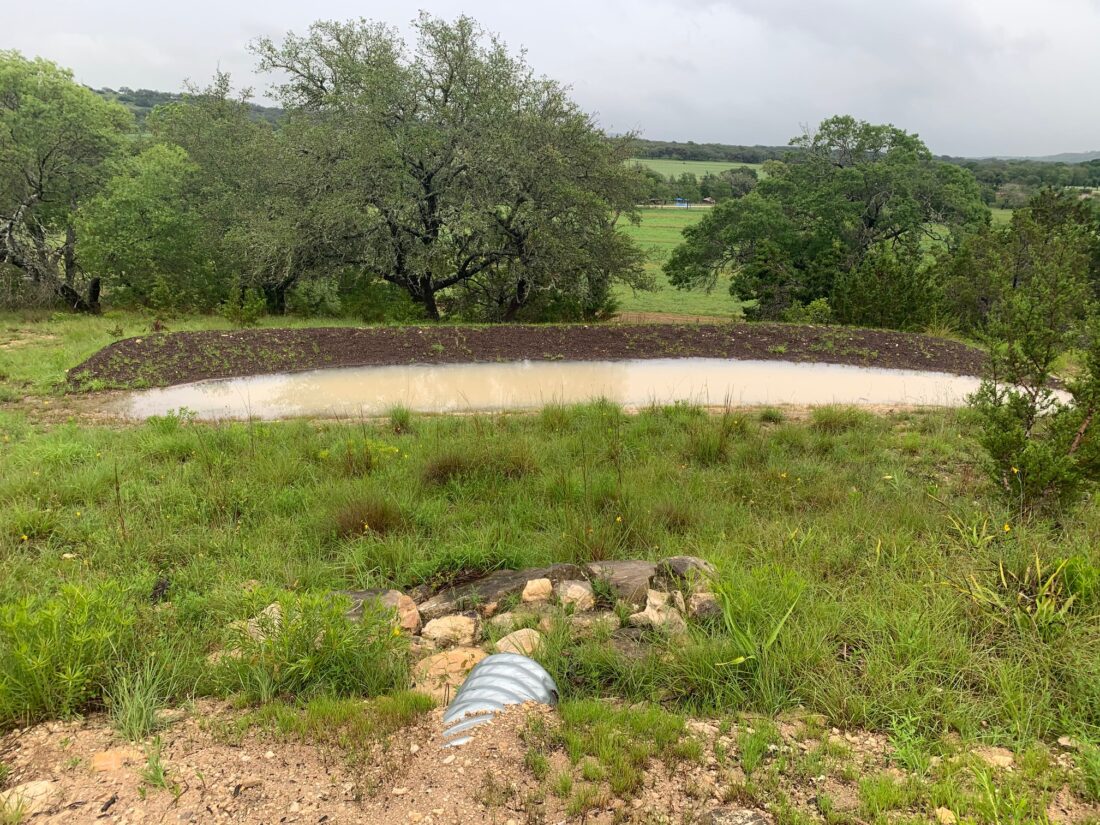
The image below shows how road runoff can be redirected and used to benefit our very dry landscape here in central Texas.  Stormwater runoff from the hillside and the road was originally carried straight downhill to the river. We installed a miniature dam in the roadside drain, and a culvert pipe that takes the water to the other side of the road. When water flows out of the culvert pipe it hits a barrier of stones that breaks up the energy of the water to help prevent erosion. Then the water is caught by a terrace that slows, spreads, and sinks the water into the ground. The terrace is then covered with a layer of compost, seed, and mulch. Eventually it is also planted with nice native trees. We still had a lot of water flowing down the roadside drain, so we added another culvert and Culvert Catcher downhill of the first one. In the last 1.5-inch rain we caught all of that road runoff and had no overflow, whereas before the water went straight to the river and was lost from the property.

The next image shows one of our larger newly built Culvert Catchers and soil and water conservation terrace flooding for the first time. This soil and water conservation terrace catches storm water runoff from a 24-inch diameter culvert pipe. The water used to go straight downhill to the creek instead of servicing the land. Now all of the rainfall and runoff is made more effective and soaks the land with beneficial moisture that lasts in the soil for weeks. This extra water in the landscape is critical during times of drought. Localized ground water recharge is a huge benefit to struggling live oaks that are on the verge of death. We have seen them respond to the extra water soaking into the ground. 


Level Sill Spillways

During dry times, these terraces are built to be drive able and mow able which improves access and management of the system. During times of extremely heavy runoff the excess water is allowed to flow out of the system via level sill spillways on the original grade that are untouched by machinery. These grassy level sill spillways are very resilient to erosion and are often used to drive or walk through during dry times. The photo below shows an example of our level sill spillways immediately after construction is finished:

Service

If you need help managing stormwater runoff on your property, give us a call! Do the land a favor and harvest some of that rainfall. We do the best Culvert Catchers and much more. 

For a high-quality topography map for low cost, check out our Topography Map Service. We can provide maps for pretty much anywhere in the United States. We also provide professional property design and consulting services in Texas. 


Education

Are you interesting in learning how to do this kind of work and start your own business? Great, our non-profit partner does educational courses perfect for central Texas practitioners. Please visit: EARTH REPAIR CORPS – Diversity . Stability . Resilience

1
3

What Makes a Great Ranch Road?

Anyone can appreciate a well-made road. But what does it take to accomplish this? How can you avoid costly design and construction mistakes? What are the consequences of a poorly made road? What are the effects of low-quality ranch roads on the property value and the environment? Let’s explore these questions and learn about what makes a great ranch road. 

Not all properties are created equally when it comes to designing the access into the landscape. If you have not purchased property yet, please check out our FREE Pre-Purchase Property Selection Service.

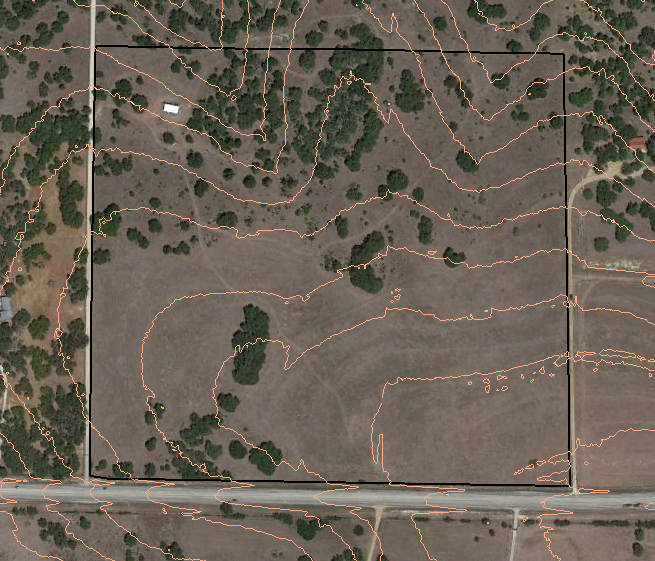
A great ranch road starts with planning. The only way to start planning is to obtain a topography map of your property, preferably one that is overlaid onto satellite imagery. A topography map on satellite imagery not only shows the elevations and how water flows through the property, but also where trees and existing buildings are located. The map will show you where to find the high ground, the low water areas, where the land is very steep, and where the slope is gentle. The topography map shows the fingerprint of the landscape, each one is different and offers its own set of challenges. A smart designer can identify the best road locations that make it easier for the contractor to build, owner to maintain, and can even provide a positive influence on the landscape.  The benefits of a robust map study cannot be overstated.

Roads are Built to Manage Water

When placing a road remember that high ground is your friend. A road on a ridge has no storm water runoff flowing towards it. Roads that go across the slope of the land will require a drain on the uphill side of the road.  How big is the drain? That depends on how much land uphill of the work site flows into the new road. This can be measured using modern mapping and satellite imagery. In Texas, we could easily see 20 inches of rain in a single day. This makes planning for storm water runoff an essential task. Everything in road building is about water management. The surface of the road should be crowned, meaning that the center of the road is higher than the edges. Even the slightest ridge along the side of the road can prevent water from draining away. Never put rocks, railroad ties, stockpiled materials, piles of logs/brush, etc along the edge of the road. If water cannot get off of the road, the road will become a river during large rain events. It’s a great way to lose road base. A wet road that is driven over frequently will form potholes, ruts, and muddy puddles. Proper drainage will provide the road with a longer life span with less frequent maintenance. The costs of maintenance on a poorly designed road can be staggering and will contribute to sediment pollution of creeks and rivers. 

A great ranch road can and should be designed and used to manage or harvest storm water runoff. If it is required to construct a road across the slope of the land, the project can be designed to move water into a pond. Properly designed and built roads can also protect buildings and agricultural areas from excess storm water runoff. Strategically placed culverts can release water into areas that are more appropriate for managing high flows of storm water. Storm water produced from the construction of roads should be managed, when possible, with soil and water conservation measures on the downhill side of drains. Many people also think that road surfaces can be made to be permeable, to reduce the impact of storm water runoff. I think this is a mistake. Roads should always remain as impermeable hard surfaces that are built for driving on. Then use the landscape to absorb the storm water downstream with good management of soil and plants.

The Proper Tools

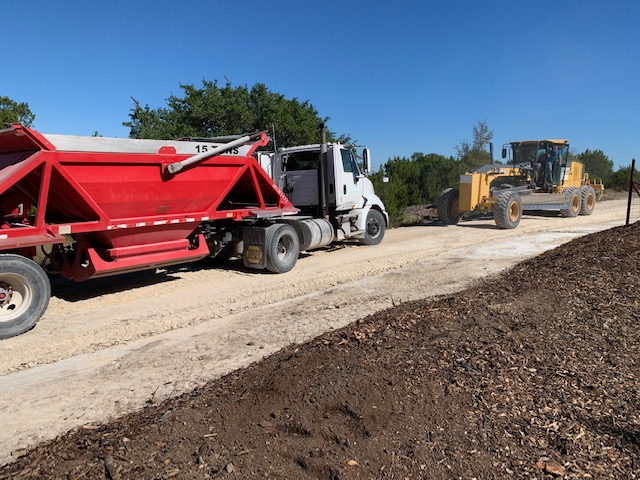
What makes a great ranch road? Once you have a good plan the next step is to find the right contractor. Although budget considerations play a role in selecting contractors, quality roads must be built with the right tools. A real road contractor will have a laser level, dump trucks, belly dump trucks, excavators, motor graders, rollers, water trucks and loaders. If your contractor is proposing to build the road with just a skid steer or a bulldozer, it may be wise to reconsider and find someone who has a motor grader. Dozers and skid steers can be used for clearing and rough grading.  However, a motor grader has the ability to cut drains and smooth out material with high accuracy. The blade can move up and down, it can be tilted forwards to spread material, it can be tilted backwards to cut material. The blade can angle to bring material from the edge of the road to the center while the angling, tilting and dropping of the corners can shape the road into a crowned surface that allows water to flow away from the center. No other machine can do this while also producing an enjoyable smooth driving experience. Dump trucks are great for hauling material, but when building roads, the belly dump is king. A belly dump truck releases the material from the bottom of the trailer in a controlled way that prevents road base from spilling outside of the edges of the road. This prevents loss of materials and a wavy edge to the road. Crisp clean edges make the road much more visually pleasing.  Water trucks will be used to wet the road in preparation for compaction. It’s impossible to completely compact extremely dry material or sopping wet material. Ideal moisture content allows the roller to perform its duties of compaction. Compaction with a roller is absolutely necessary to create a great road. Without compaction, vehicle tires may spin on the loose material and create potholes. 

Dimensions

A high standard for common ranch roads in Texas conforms to the following dimensions. The road should be estimated to have a 9-inch layer or road base that compacts to 6 inches. If you plan to have a road base that is 6 inches thick, 9 inches of road base material volume is estimated. Limestone road base shrinks 33% with compaction. The entryway should never be narrow. Keep in mind that an 18-wheeler will need at least a 50-foot-wide mouth at the entryway, then road will then gradually narrow down to its standard width. There should always be a recessed entryway gate 75-100 feet from the edge of the property. This allows trucks and trailers to safely pull off the main county or state highway without blocking traffic. The road is 12 feet wide; this will allow two cars to pass each other with each vehicle keeping two tires on the hard surface. It’s always a good idea to think about how the egress for large trucks and trailers. Can these large vehicles safely get in and out of the property without damaging the land? In some areas, pulling off of the hardened surface is not an option due to soft and wet soils where vehicles get stuck in the mud and incur the property owner unnecessary costs to repair damage. Avoiding sharp curves in the road during the design phase can help keep trucks with long trailers from doing damage to the land. Trailer tires do not follow the same path as the truck tires, this is known as off tracking.  Off tracking becomes a problem around sharp corners with a less than 90 degree angles and where there are obstructions near the corners like trees or steep drop offs.


Clean Up and Revegetation 

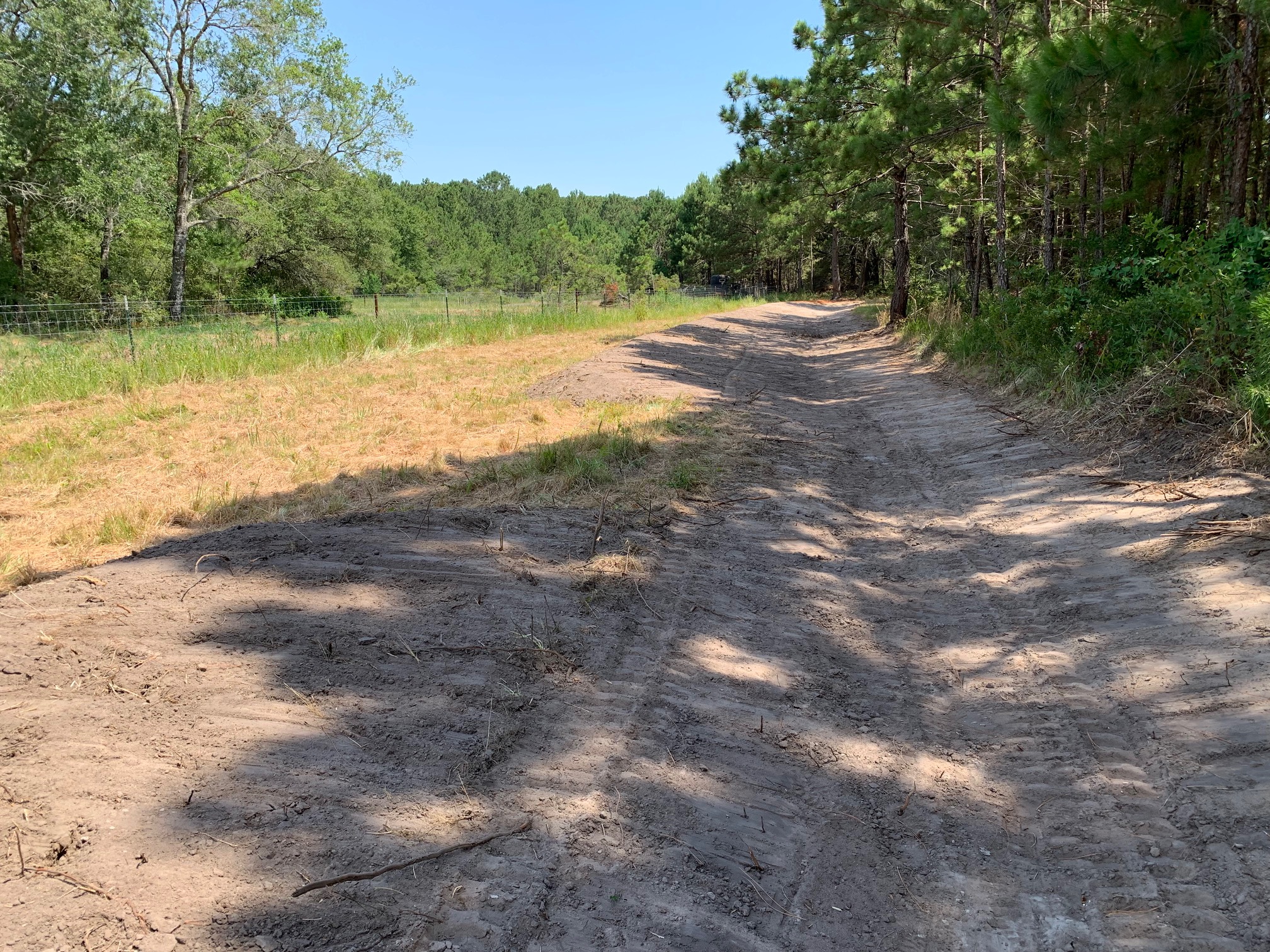
What makes a great ranch road? After construction is complete it is time to clean up the site. Do not forget to include this in the budget. Brush piles from clearing can be burned or chipped up to reused in the revegetation effort. Any piles of dirt should be spread out in low spots or hauled off from the site. If the project is done in the fall through winter, an easy way to achieve vegetation is to use annual cool season rye grass. This seed can be broadcast onto the soil with a thick application for cheap and easy cover during the cool season. Perennial grasses should also be seeded to establish ground cover during the warm season. Establishing ground cover is an important part of any road project. Vegetation will help prevent erosion along the edges of the road and in the newly cut drains. All bare soil should be covered with thick green grass. It helps a lot of the drains are built in a way so that they can be easily mowed in the future.

Accessing newly purchased property should be easy. Why purchase land if you cannot enjoy it? A good road is a huge first step to developing a property that is usable and valuable. A great road is a great asset and will last many years with very low maintenance. Keep in mind however that all roads require maintenance and its easier to do it early rather than late. What makes a great ranch road? It’s planning, having the right tools, execution, and revegetation.

Other Things to Avoid

  • Try to avoid crossing gullies and low water areas when possible
  • Avoid trying to cross boggy or swampy areas 
  • Do not allow the road to become the gully 
  • Avoid building roads without proper drainage
  • Avoid using washed gravel as a road base
  • Do not using pea gravel as a road base, any river rock or base with round stones.

For a high-quality topography map for low cost, check out our Topography Map Service. We can provide maps for pretty much anywhere in the United States. We also provide professional property design and consulting services in Texas. If a high-quality ranch road is desired here in Central Texas, send us a message, we can help. 

1
2

Texas Topography Maps

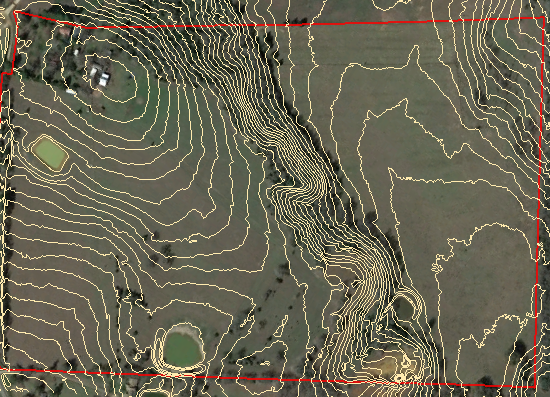
LIDAR contour lines at 2 foot intervals.
Successful Texas property design starts before the land is purchased and with Texas Topography Maps. For information about property selection visit my blog post here.

Today, there are thousands of people moving out of the cities. They are migrating across state lines and looking to settle in the country side of the great state of Texas. Whether you are trying to decide on a property purchase or making choices about how to develop a property that’s already been purchased, it is absolutely critical to have a clear picture on the geography of the landscape. Thats when you need Texas Topography Maps. We can help! 


Affordable Texas Topography Maps


Fortunately, today we have access to some incredible resources in Texas that make decision making easier. Satellite imagery, computer programs, and LIDAR topography data are powerful tools that allow us to save time and money. Achieve your goals on farms, ranches, homesteads, and conservation properties now! These maps are extremely helpful in selling real estate! However, theres a learning curve involved in processing this data into a usable, affordable and accurate format. I will provide you affordable and quality Texas topography maps in a variety of usable formats. These maps have changed the way I do business and I know will be invaluable to Real Estate Agents, Architects, Farmers, Ranchers, Homesteaders, Conservationists, Small Business Owners, and anyone interested in owning land in Texas.


A Variety of Uses


A good topography map, aka contour map, can be helpful in many ways. These maps will help you to determine where the best sites are to build a home, including the orientation of the home in relation to the sun and the landscape. You will be able to identify spots that need to be avoided because of high stormwater runoff or steep terrain when building a driveway. Contour maps will help you understand how water flows through the property and how you will better manage it. Water flows at a 90 degree angle to these level lines that are drawn on the map, because of gravity. My personal favorite is to overlay the topography map onto satellite imagery using a program that’s free to download like Google Earth Pro. This program allows you to zoom in and out, draw lines/shapes, and measure areas on your landscape making it very user friendly!

Here are some formats available: AutoCAD DW, AutoCAD DXF, Microstation DGN, KMZ (KML), Shapefile, CVS, Excel, Vector (AIX/Illustrator, EMF, EPS, PDF, SVG, and SVGZ), Raster (BMP, JPEG, PNG, TIFF, TGA, and GIF)

Texas Topography Map on Homestead

Process

Currently this service is only for Texas properties. Please email me your name and address, the location of your property, like the property address. It’s very helpful if you can also send an image that shows the boundary of your property and let me know the size of the property (how many acres).  Watch this tutorial on the best way to send me your property boundary. We need to make sure that you get the correct map. Let me know what format you would like the data to be sent in. If you are using free Google Earth Pro (recommended) that will be a KMZ file. We’ll send you an invoice via email and once payment is received you will get your topography map in email. We accept cash, check, or payment through Venmo. 

Thanks for your business!

Contact

To get your Texas Topography Map contact me by email:
 
vandyck.designs@gmail.com
 
For volunteer and educational opportunities visit Earth Repair Corps
 

0
1
Texas Topography Map on Homestead

Texas Property Design

Successful  Texas property design starts before the land is purchased. For information about property selection visit my blog post here

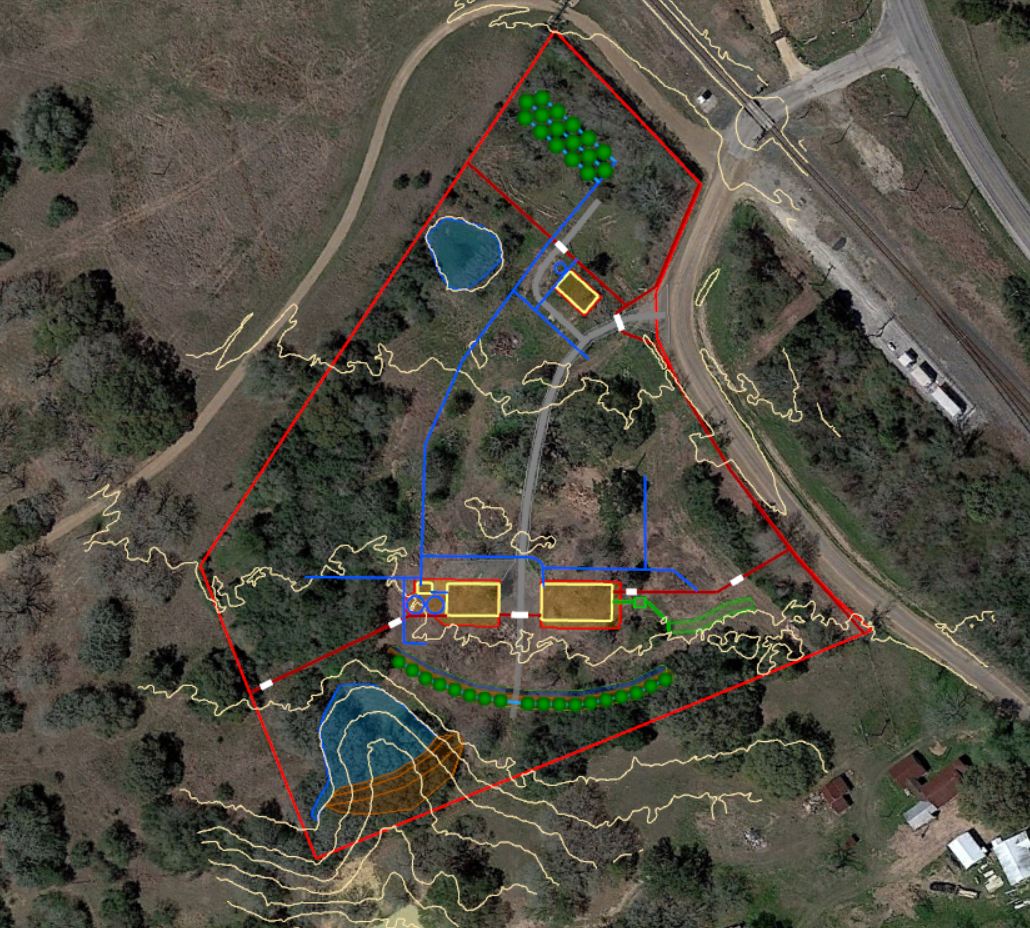
Texas Property Design over satellite imagery

Texas Property Design over satellite imagery

Designing a resilient landscape is a tough challenge. Every property is different and every client has different skills, resources, goals and interests. Context is everything and costly mistakes can create years of setbacks. You should not be afraid to get help than can save you time and money! It’s best to start off on the right foot with a full scale plan that provides focused direction for your actions now and into the future.
Experience
Van Dyck Earthworks & Design LLC has worked with clients all over Texas and completed over 50 full scale Texas property designs since the business was started in 2016. Our clients are organic farmers, regenerative ranchers, permaculture homesteaders, conservationists, game managers and government entities. Whether you are developing a raw piece of land from scratch or retrofitting an established property; we can provide you with cost effective solutions that are practical, productive to your local ecosystem, and aesthetically pleasing.
Process
Give me a call and we can discuss whether or not I’ll be able to help you with your project. If it sounds like a mutually beneficial relationship then I’ll ask you to send me some your location with an address, an image showing the property boundary, and a complete list of everything that you want to achieve. Explaining your situation with as much detail as possible will yield a better end result. Your specific context will determine how the design will be laid out.
Each design is overlaid onto satellite imagery and has multiple layers. The structure of the design is based off of my study of P.A Yeomans Keyline Scale of Permanence, the more modern Regrarians Platform taught by Darren Doherty, and Permaculture Design. Texas property design requires attention to detail and deep understanding of the local climate and conditions.
  • Geography- The design will outline the border of the property and also includes a topographic map of the property. Usually we can obtain LIDAR topography data for properties in Texas. We can also measure water catchment areas using LIDAR data and overlay this onto satellite imagery.
  • Water- Each design comes with an appropriate water layer. This includes the layout of dams, conservation terraces, and conceptual irrigation system layouts that service the property. In Texas, water availability is either feast or famine. More and more landowners are starting to realize the value of a trademarked Drought Proof Texas design.
  • Access- One of  the most overlooked but important aspects of design is accessRoad construction and maintenance is one of the largest unexpected expenses for most new land owners/managers. Using the topography of the land as a guide, we can achieve the best possible access system for your property that will provide priceless value to your land. Good access saves time, money, and endless headaches of a poorly designed system.
  • Buildings- We also provide recommendations on where to place and how to orient your building sites. Good building sites lower the cost of construction, lower the cost of maintenance over the lifespan of the building, saves on energy costs, and provides benefits instead of harming the surrounding landscape. The money spent on the design will be recuperated on this element alone! Take peace of mind knowing your building will be safe from as many liabilities as possible.  We will also make recommendations on home design, building materials and waste water systems when necessary.
  • Fencing- Every homestead, farm or ranch needs a good fencing layout.  Each design will have appropriate fencing recommendations that will serve the clients specific needs. This will include specific types of materials, building specifications and measurements that fencing contractors will be able work from with ease.
  • Forestry- We design orchards, food forests, privacy screens, windbreaks, forestry management plans, and functional solutions to the management and establishment trees on your land.
  • Soil- The plans provided for you design will include soil management practices for every square foot on the property. This includes the design and placement of gardens, recommendations and concepts for grazing management, management of hills and slopes, management and layout of agricultural areas, establishment of native grasses and prairie communities. The goal is to have 100% ground cover 100% of the time and to improve soil organic matter over time.
  • Energy- When required, we can provide you with a layout for your grid power system. Many clients are also interested in solar energy and, if so, we can provide recommendations on the best course of action to achieve energy independence. We can also help you design a layout for a propane system if desired. Redundancy in your energy system provides great financial savings and security.
  • Economy- Many clients are working to create income streams using their land. We work to integrate all elements of the design to help assist with these endeavors. We have helped folks with their ranching operations, farm development, Airbnb/rental cabin development, and educational operations. Let us help you achieve your goals or determine the feasibility of projects!

Each Texas property design starts off with a first draft. If any adjustments are needed or if anything was left out changes will be made. The client is then presented with a second draft for overview. If any further changes need to be made we’ll take care of those and then present a final draft. At the end of the design process the client gets a KMZ file of the design and a written report. The KMZ file is used with a program called Google Earth Pro which is totally free to download. With this program you can zoom into your design, click on aspects of the design to get more details, and take measurements of lengths and areas. This is an extremely easy way to use your design to communicate with contractors. The report comes in PDF format and has the maps of each layer of the design along with detailed descriptions of each element. There is also a brief guide to using the design on GEPRO.

Each customized design is priced at a flat rate based on the criteria and complexity of the project.

Lifetime of Value
-Save time and money not only in the development of property but also maintenance over a lifetime!
-Avoid costly mistakes, type 1 errors, and debilitating setbacks.
-Have a clear and focused vision of the end goal.
Set up your phone appointment by email:
vandyck.designs@gmail.com
For volunteer and educational opportunities visit Earth Repair Corps
0
0

Land Restoration in Cedar Regrowth

All of us who live in the Texas hill country are well acquainted with the Ashe juniper and its challenges for land conservation. This blog post is about a land restoration project on a degraded caliche hillside. I’ll show all the steps of what we did to harvest water, control erosion, improve soil conditions and increase species diversity on the land.

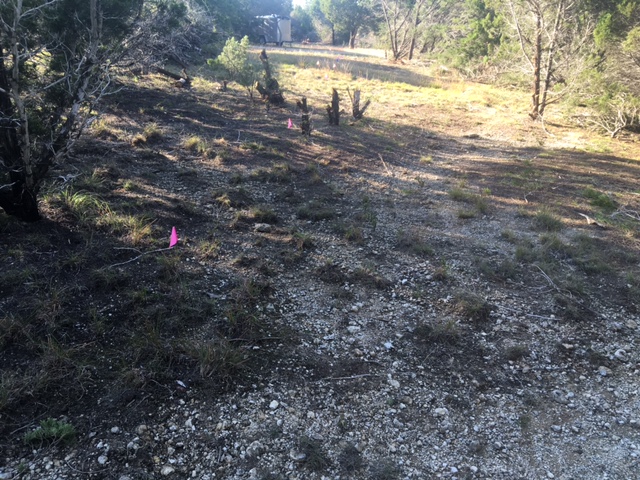
Soil conditions common to the site. Notice all the bare soil. The flags marked level lines that we cleared of Juniper.

Ashe juniper is a native Texas tree is very well adapted to our climate and soil conditions. It is often seen as a menace, but I have grown to respect this tree for what it  really is, a tough pioneer species. The cedar berries are also one of the most utilized sources of food for many species of wildlife. This is why it spreads so quickly as the seeds are being eaten and “planted” with manure by birds and small mammals. Often in very degraded areas of our caliche and limestone soil, the cedar trees are the only plant with any topsoil around them. This dark soil was created by the cedar trees! Cedar trees also have very thick evergreen foliage that intercept heavy raindrops before they hit the soil. This protects the bare soil from the initial impact of the raindrops and acts like a slow filter for the rainfall into the soil. This is very helpful during our common flash flood deluges when water is moving too quickly and causing damage. However, the cedar trees can begin to form a monoculture thicket which makes the land less valuable to wildlife, soil micro-organisms, and humans.


Soil and Water Conservation


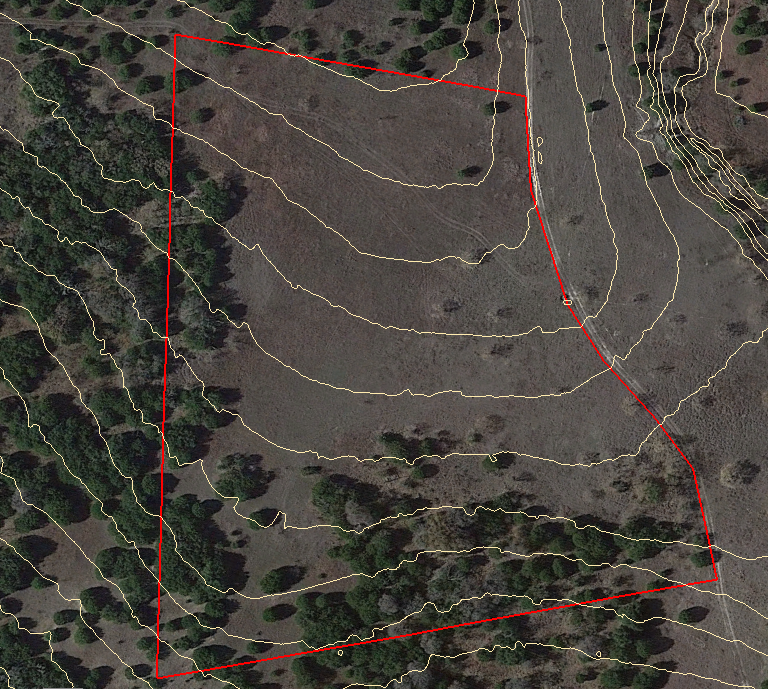
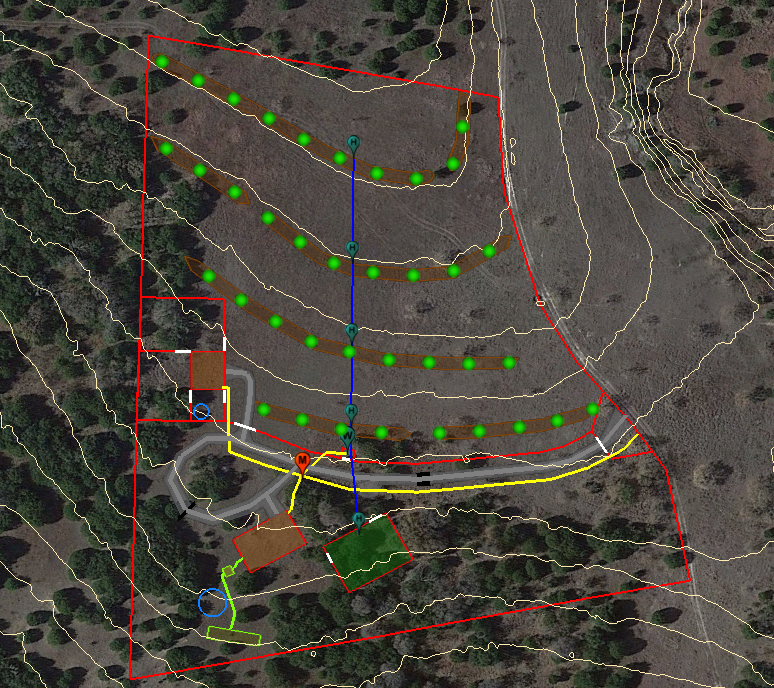
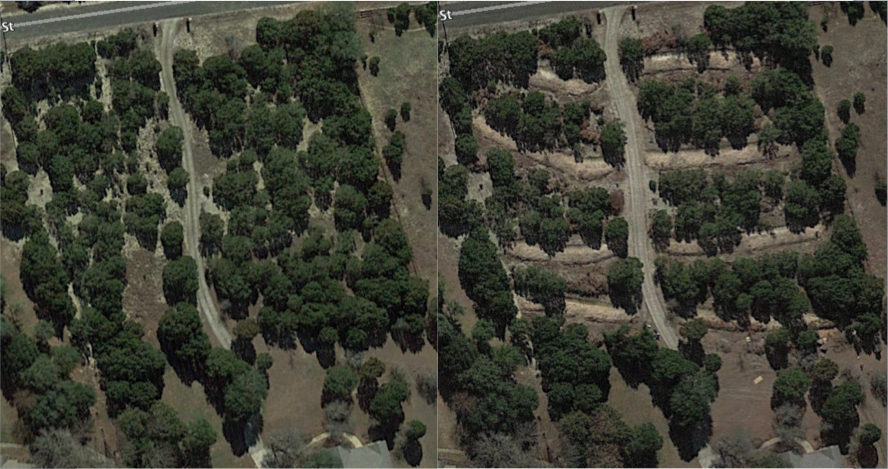
Before and after satellite imagery

The client wanted to clear cedar, harvest water, plant natives and also some fruit trees. They wanted to do the right thing for the land. While most folks would just bulldoze all the trees down and burn the brush, we came up with a much gentler solution. This was to clear only the juniper that we needed to get other plant species easily established and use the remaining juniper trees as nurse trees to provide shade and wind protection.

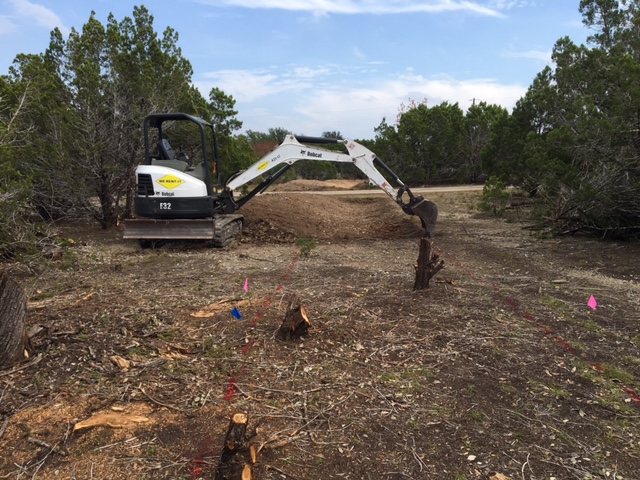
We began by surveying some levels lines through the cedar trees, all measured 70 feet apart on at the driveway and marked with flags. These lines we used as our guide to clear the cedar trees on contour. All of the brush was stockpiled for later use either uphill or downhill from the line. This accomplished the our clients goal of thinning the cedar trees but also left us plenty of protection from wind and the hot Texas sun. We cleared only enough to allow a mini-excavator to get in and out of the work site safely. I used the mini-excavator to build a series of conservation terraces that will virtually eliminate runoff and provide a platform to plant a great diversity trees, native grasses, wildflowers, and cover crops.

This photo shows the 6,000 lb machine and conservation terraces being built.

The terrace basins are 90 inches wide, 9 inches deep, add up to a total length of about 950 linear feet, and have a water storage capacity of about 25,000 gallons. The high calcium, gravelly soil, soaks in water very quickly allowing the basins to fill and drain multiple times in a day. Not only are these structures adding massive amounts of water to the soil, they are also mitigating hundreds of thousands of gallons of flood waters from entering the creek. The berms were about 9 feet wide and 15 inches tall at the crest. The teeth of the excavator bucket was used to break up the soil into very small pieces to provide great tilth for plants to grow in.  These berms are excellent for planting native trees and even fruit trees into, their roots are easily able to proliferate in the decompacted soil.

Here a conservation terrace that has just been completed. Notice how close we were able to keep the cover from the cedars.


Community Outreach


We were fortunate to be able to call for help from the Earth Repair Corps and Kirby Fry to finish the project. We organized a Permablitz around this design where volunteers came to help install irrigation, plant seeds, plant trees, build tree cages for deer protection, and spread mulch over all of the bare soil. This is a great way to meet people in the community and get lots of hands on experience. The results, as usual, have been spectacular and will continue to get better as the soil improves due to added moisture and root activity.

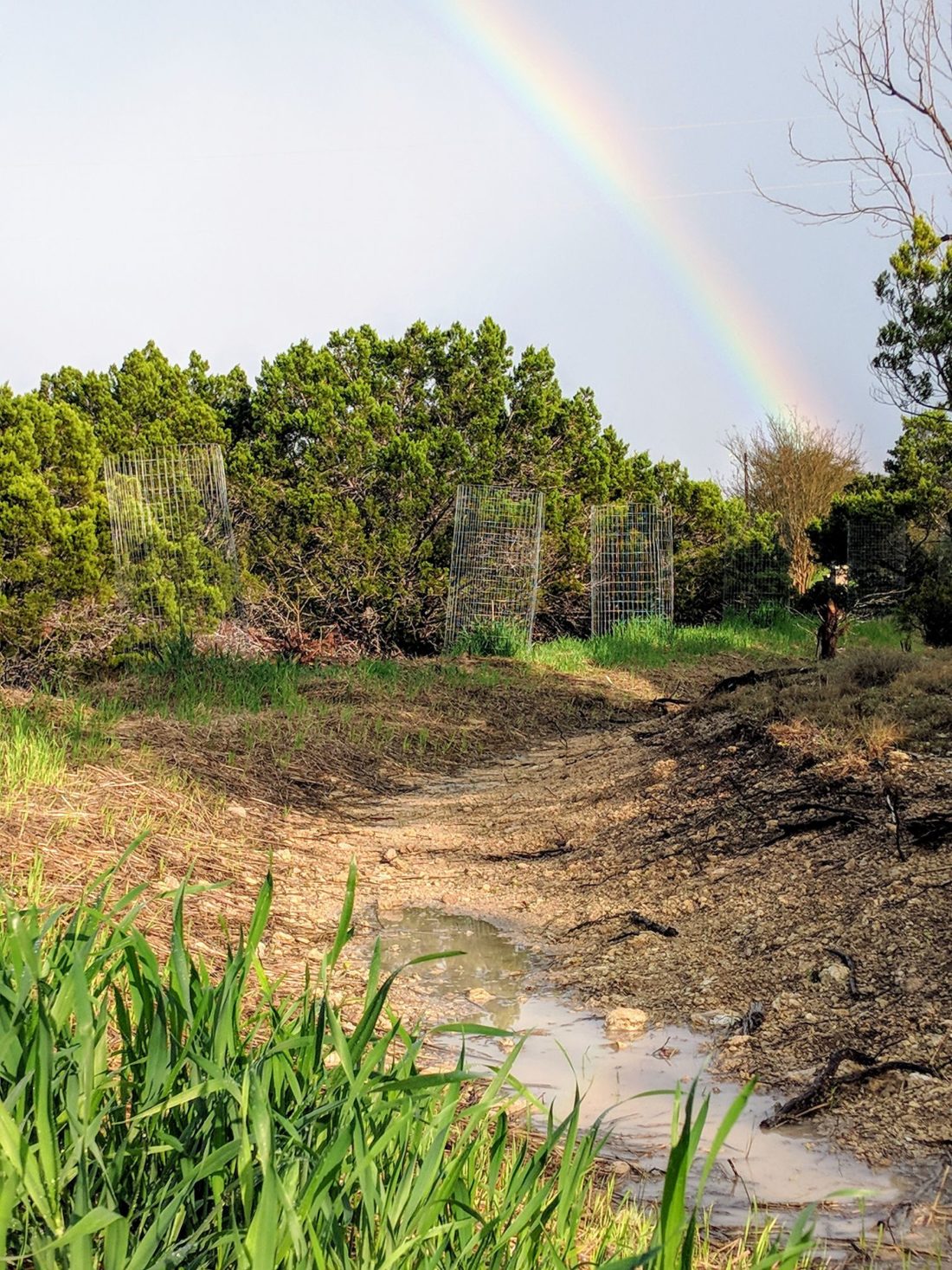
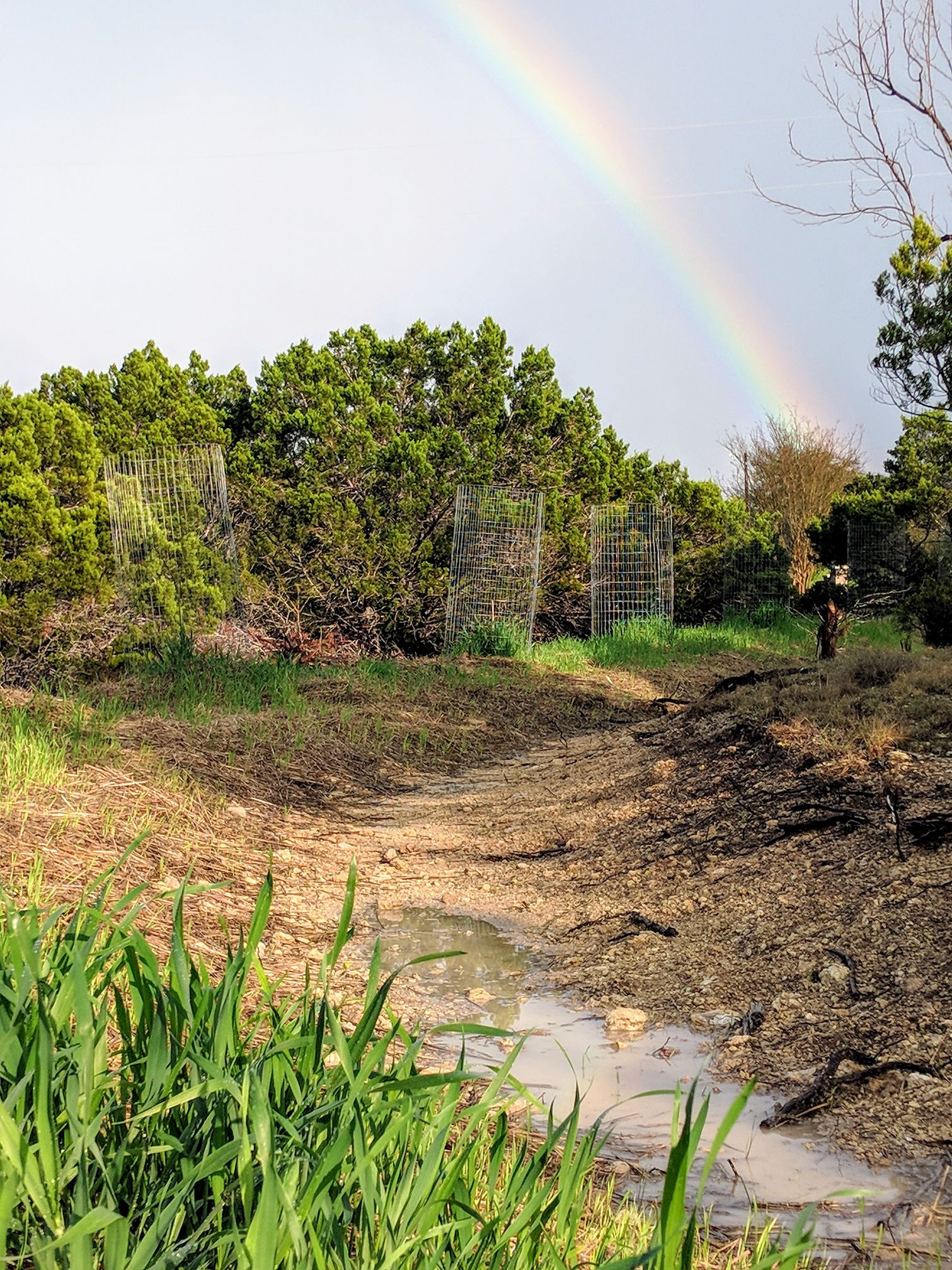
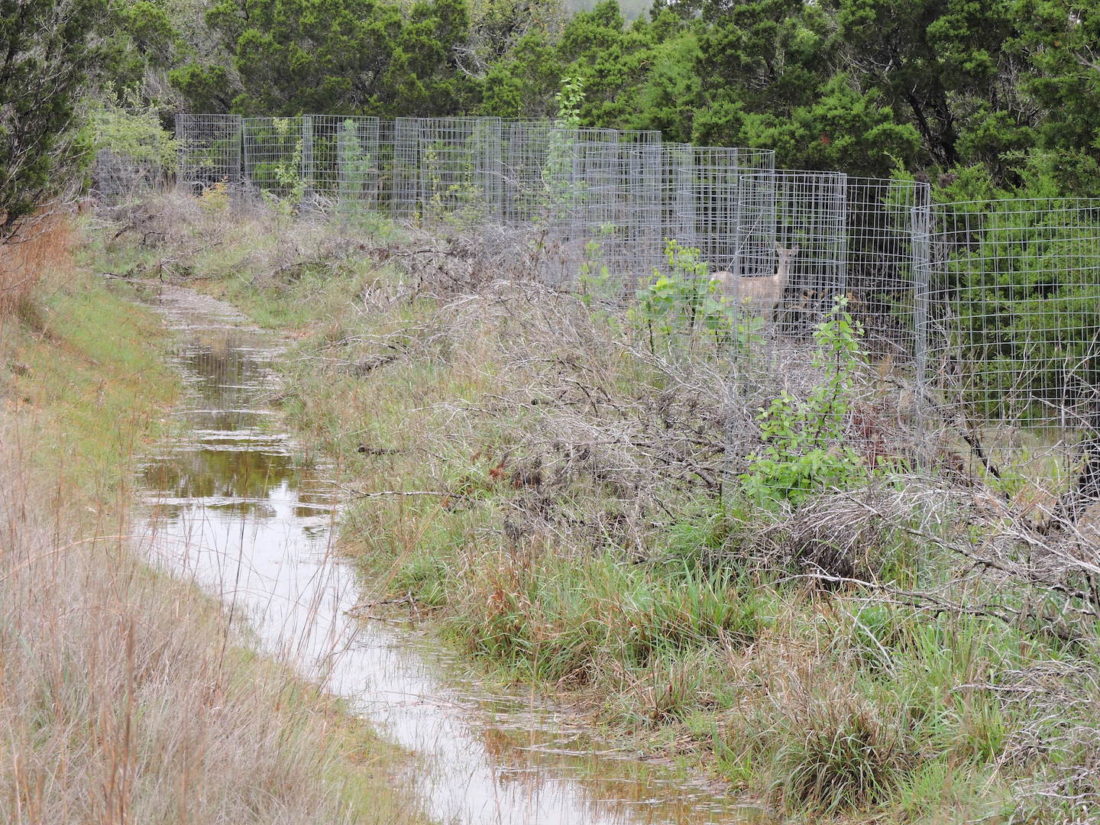
Here you can see the first seeds coming up, the trees planted with tree cages, just after a rain.

A picture from the following summer. American basket flower in the foreground.

By harvesting water, bringing in organic material to cover the ground, and planting seeds we can help even the most degraded landscapes provide function and beauty that we can be proud of. The client mentioned recently that this garden was “One of my favorite places to be!”.  Maintenance for this system is not hard. The most important things are to keep adding mulch where the ground has not recovered yet, check that each tree is getting water from the irrigation system, pruning as needing, and taking down the mature vegetation during the winter so that light can reach the growing points of the plants in the spring.


Validation

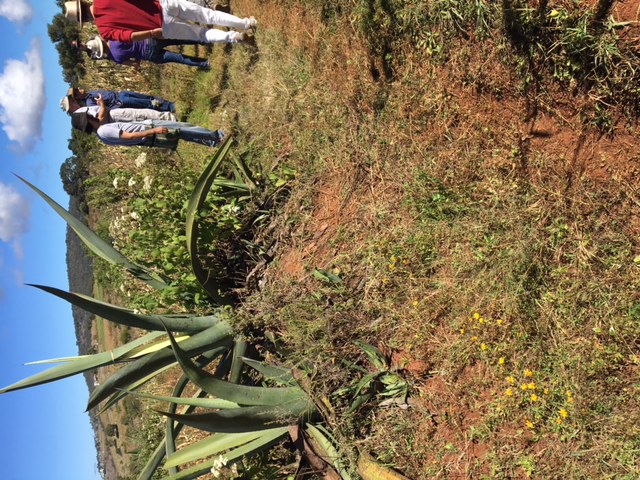
I was not able to be at the Earth Repair Corps Permablitz event for this site because I was visiting Oaxaca, Mexico. Curiously, we ran into some conservation terraces that were built by the locals. They had been using a system very similar to ours in the limestone mountains of Oaxaca for many generations. Their main crop was agave, from which they harvested the “aguamiel” or honey water from the base of the flower stalk. A 1000 liters of this agave nectar can be harvested from one plant over the course of 3-6 months. According to Native American history this process was discovered over  1000 years ago. The honey water is used medicinally and they also ferment this liquid into a particularly viscous beer known as pulque. The agave plants themselves are controlled in the local villages because of their value. They grow these highly prized plants on conservation terraces almost identical to the ones I built on this site in Leander, Texas. They said the terraces were used to harvest water and prevent the soil from washing away during heavy rains. The climate there was almost like a limestone mountain desert covered with cactus and thorny trees.

Photo of indigenous conservation terrace in Oaxaca, Mexico with agaves growing on the berm. We got to taste the aguamiel and pulque right off the farm. They were also growing corn in soil conditions that I could not believe. The success due to adapted genetics from generations of selection.

2
0
Road Equipment

A soil and water conservation case study: Little Barton Creek Preserve

I was very honored to have one of my projects at Little Barton Creek Preserve featured on the blog of Texas Living Waters organization recently. I love their moto “Fresh water, forever.”.

Texas Living Waters is a collaboration of conservation groups working to ensure fresh water will always reach its natural destinations. For our wildlife, our economy and our kids. They are working to help keep our springs and rivers flowing year round and protected for future generations.

Read the blog post and see all the great images here:

https://texaslivingwaters.org/little-barton-creek-preserve/

Little Barton Creek Preserve is a privately-owned conservation easement in Dripping Springs, Texas that is dedicated to habitat restoration. This area of Texas is rapidly developing and at risk of both severe drought and flooding conditions.  With our help, the family managing this conservation easement has taken creative measures to mitigate these risks and increase wildlife habitat at the same time.

In two years we have transformed a caliche hillside from a barren, lifeless landscape into the most biologically-diverse area of the property. Here’s what we did:

  1. Basins were dug, eight feet wide and nine inches deep, in contour patterns across the landscape for a total of 1,400 linear feet.
  2. The soil excavated from the basins was shaped into garden bed-like berms
  3. The berms were then seeded with a diverse mixture of native grass, wildflower, and cover crop seeds, which were then covered with a protective layer of compost and mulch.
  4. Next, the berms were planted with 40 species of native trees, fruit trees, and pollinator forage trees.

Today, this conservation terrace is well on its way to becoming a richly diverse and abundant food forest for both wildlife and family managing the land.

For this restoration project, the family chose to tackle one of the most degraded areas on the property. This was a caliche and limestone ledge that had lain barren for as long as anyone can remember. Almost no plants were growing and it was hard to believe that anything could grow in such bleak conditions. The bare surface of the soil had turned into a clay hardpan that would shed most of the rainwater that falls on it, letting very little water filter into the ground. There was also a significant amount of runoff from the road above that was causing a large amount of soil loss when storm water would flow across the bare soil…

Please visit the Texas Living Waters blog to read the whole post!

https://texaslivingwaters.org/little-barton-creek-preserve/

To see more about this project visit my projects page that has much more photo documentation:

Little Barton Creek Preserve

0
1

Pre-Purchase Property Selection Service

Successful Texas Property Design starts before the land is purchased.

 
Buying property is one of the biggest investments that a family will make. It can be exciting and yet stressful. It is important to ensure that the new land owner will be able to accomplish their goals and avoid unnecessary challenges and mistakes. Choosing the right land not only helps to save money when developing the land but also in the long term cost of maintenance on the property. Our Pre-Purchase Property Selection service delivers the results you need.
 
Not every property is worth buying and some can lead to disaster. The shape of the property, terrain, aspect, land resources, and accessibility should all be assessed for ease of development and management. A professional pre-purchase property evaluation can be the most valuable investment for the subsequent land owner. This service often provides tens of thousands of dollars in savings and countless hours of the land owners priceless time saved during a lifetime of management on the property. The land should be enjoyable to work with, not a life long frustration.
 
Usually a buyer will have goals and dreams for their new property. They purchase land and only realize later on that the land that was selected has difficulties and expenses that were not anticipated.


Experiences
 
 
I once had a client that was closing on a property call to hire me for a property design. When I asked to come see this property before closing, they declined this offer. Soon after I went to the property for the initial design consultation and could tell before entering the property that they should not have bought it. I pulled up to the gate of a long and narrow easement, the road was pure sand and looked more like a drain than a road. The property was low lying and prone to flooding. At one point my clients could not leave the property for a week because of flood conditions and high water over the road. The family started to get sick because the home was riddled with mold. It could not affordably be fixed and they had to walk away. The unnecessarily lost the home, the land and their dreams for the future. I also have clients who bought land that was incredibly steep, rocky and covered with cactus without realizing the challenges and limitations they would face on land of this type. Long and narrow properties have also put many clients at a significant disadvantage when pursuing their goals. Don’t let this happen to you!
 
 
Lifetime of Value
 
 
For incredibly low cost we can help you choose a property that fulfills your vision. Is there good water availability on the property and opportunity for redundancy? Will the property be accessible with a road that is easily maintained? Is there opportunity for successful orchards, gardens, animal grazing, or other enterprises? Is the shape of the land conducive to easy management or difficult management? Are there enough good building sites on the property to meet the land owner’s needs? Is the property private? If the land owner wants to produce food on the property, is there a market for these products? These and many more questions can be answered.
 
Initially we work with the client to communicate their vision for the future. The client verbalizes all their needs, wants and goals for the land. Together we develop this context with an initial phone consultation and follow up email correspondence. We give some selection criteria to begin the process. The client then sends property listings that interest them via email. Each listing is assessed remotely and given a ‘yes’ or ‘no’ answer and a short explanation of reasons why. The explanations help guide the selection process so the client can begin to see the better properties and skip over the poor properties. Usually we will find one ‘yes’ for every fifteen to twenty five listings. Once acceptable properties have been identified we meet for an onsite assessment at each one and compare the various properties. The client then purchases a property that has been hand picked for ease of sustainable design and ease of management.


Contact Before You Buy
 
 
Clients can send me property listings for FREE EVALUATION! If you have listing of a property that you are looking at, send it over and you get advice for zero cost. Site visits are charged hourly including half of the travel time at $50.00 an hour. Take advantage of this Pre-Purchase Property Selection Service now!
 
Email your listings to:
 
vandyck.designs@gmail.com
 
Also get info about affordable Texas Topography Maps.
 
For educational and volunteer opportunities check out Earth Repair Corps.


0
0